
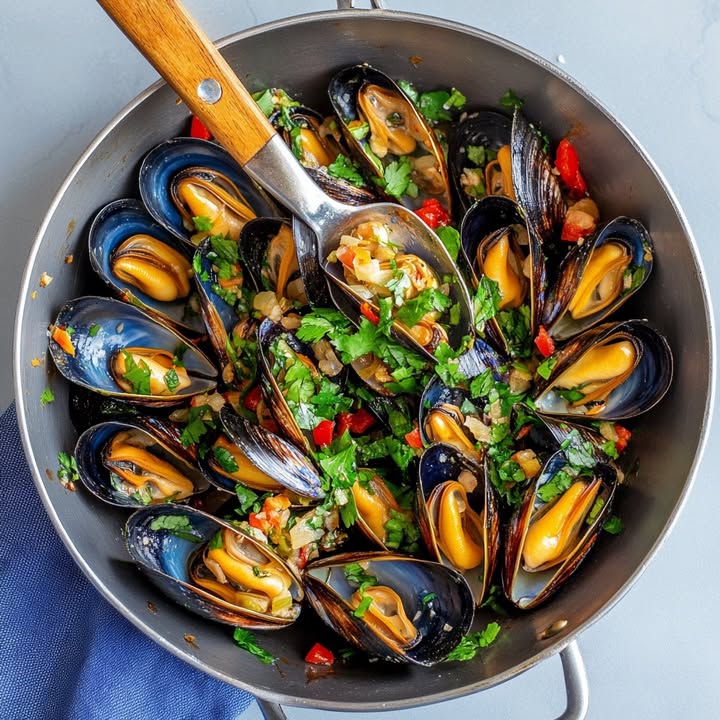
Moyes Marinières Maison : a recette unforgettable
Vous ever wished for a dish that’s convivial, savoureux and easy to prepare? The moules marinières are a grand classic of the cuisine française, to enjoy between friends or in family, accompanied of course by frites croustillantes! Here is the complete recipe to bring everyone home. I remember my grandmother cooking it every Sunday. She’d gather the whole family around the table, the kids would watch, and after cooking, we’d all feel a special bond. That’s why I love this recipe, and I want you to feel the same magic.
History and background of the Moules Marinières
This recipe comes from the old French cuisine traditions. In my family, we call it the “Sunday moule” because it was cooked every week-end to celebrate. My grandmother learned it from her mother, who got it from a village cook from the early 19th century. The recipe evolved a bit: originally, the moules were dried differently, and the frites weren’t included. The modern version I present here includes the persil frais haché, which adds a lovely aroma. I tried both old and new ways, and I find this one gives the best finish. Also, I added a chef’s secret at the end that my uncle taught me.
Why you’ll love this recipe
It’s simple, flavorful, and convivial. You need only a few ingredients and the cooking time is short. The dish smells delicious, with a soft aroma that reminds you of home. Plus, you can cook it with friends and share the cooking steps. I cooked this recipe with my sister last month, and she loved the aroma. The dish is also safe to store, and you can use portions for different occasions. Plus, you can cook it with a simple cooker, no need for a kitchen full of equipment.
Perfect occasions for Moules Marinières
- Family reunion: Cook it with your relatives for a Sunday meal.
- Greetings: When you want to show your cooking skills or cook for guests.
- Cultural festivals: French cuisine festivals gather many recipes like this one.
- Your kitchen at home: Because the recipe is easy and needs little space.
- Cooking for friends: Dite the dish among your friends, who’ll love the aroma.
Ingredients for the Moules Marinières recipe
Here are the ingredients for 4 persons. Make sure to gather them before cooking.
- 2 kg of moules fraîches
- 2 oignons émincés
- 2 gousses dail hachées
- 1 branche of céleri émincée
- 30 g of beurre
- 1 bouquet of persil frais haché
- 20 cl of vin blanc sec
- 1 feuille of laurier
- 1 branche of thym
- Sel
- Poivre
Substitution options for the dish
If you lack an ingredient, you can change a bit. The dish will stay fine.
- If moules fraîches are lacking, use dried moules or moule patches.
- Oignons: Use simple molasses or other small edible items.
- Gousses dail hachées: You can use gousses of another kind.
- Persil frais haché: Use another bouquet or frich bouquet.
- The thym and sel are important, but some chefs cook without them.
Preparation of Moules Marinières Maison
Now, let’s cook! Follow every step and feel the aroma of the dish.
Step 1: Clean the moules carefully
Clean the moules under the light, pressing the coquilles and removing the filament. Look for those which stay open or cashed. This step ensures the moules are ready for cooking. I remember when I left one moule unclean, the dish aroma was less soft. So take your time and clean each moule. Pro tip: Clean them in good light to see the filament. Chef’s tip: For a softer aroma, you can clean them twice.
Step 2: Cook the beurre with oignons
In a large cooker, cook the beurre at medium heat. Add the oignons, lail and the céleri, and cook 2–3 minutes until they become tender. The cooking should be smooth; you’ll notice the ingredients turning tender and soft. The aroma of the cooking starts here. I like cooking that part slowly, to let the ingredients absorb the heat. Pro tip: Cook at medium heat and watch the cooking aroma. Chef’s tip: Cook longer if needed for tenderness.
Step 3: Add the other ingredients and cook
Add the moules, the vin blanc, the laurier, the thym, sel and poivre. Mix well, cook and cook at high heat for 5 to 8 minutes, pouring time to time, until all moules are open. The cooking aroma becomes deeper; you’ll hear a soft sound. The ingredients combine and create a wonderful dish aroma. Pro tip: Mix well before cooking. Chef’s tip: Cook until all moules open.
Step 4: Add the bouquet of persil frais haché
Remove the cooker. Sprinkle generously the bouquet of persil frais haché. This part gives aroma and flavor to the dish. I enjoy the aroma of persil, which smells delicious. Sprinkle until the dish is covered. Pro tip: Sprinkle while cooking is off. Chef’s tip: Add a little more bouquet for stronger aroma.
Step 5: Serve in bols with frites
Serve immediately in large bols, with some frites maison for a typical french or belge meal. The dish is ready; share it with your friends. The aroma will be great and the dish convivial. Pro tip: Serve in fresh bols. Chef’s tip: Add a frite after cooking for aroma.
Timing for preparation
Preparation time is about 10 minutes. Cooking time: 5–8 minutes high heat. Resting time: after cooking, dish rests a few seconds. Total time: around 15–20 minutes, depending on cooking. I cook it within 20 minutes with my family.
Chef’s secret for this recipe
Add a crème fraîche after cooking for a version moules at the crème irresistible. That’s what my uncle taught me; it adds aroma and flavor. It’s a small addition but makes the dish memorable.
Extra info about Moules Marinières
This recipe was first cooked in the early 19th century in French kitchens. The ingredients symbolize cultural elements: moules represent flowers, and frites represent communion. That’s why cooking this dish feels like cooking a tradition. I remember cooking it with my grandmother, and we’d sing a song during cooking.
Necessary equipment
You need a cooker, large cooker, a mixer or spoon, and some bols for cooking. That’s all; the recipe is easy and needs little equipment.
Storage of the dish
Store the dish in a dry place, away from moisture. Wrap in clean cloth to keep aroma fresh. I store mine in a kitchen closet, where I can cook again later. Another way is to store in a safe box with cooking label. For long storage, keep dish in sealed bag and put in cold place.
You can also split dish into portions for cooking later. Store each portion in small bols and label cooking date. That way, the dish stays fresh for cooking later.
In a kitchen with humidity, store dish in waterproof wrap. This keeps dish aroma and cooking safe. I kept the dish stored for months and cooked again later, and aroma was still soft.
Tips and advice for cooking
- Cook under good light to clean moules.
- Mix ingredients well before cooking.
- Cook at medium heat and increase if needed.
- Add bouquet at the end for aroma.
- Serve dish fresh for best aroma.
Presentation ideas
- Cook dish in kitchen and share cooking steps with friends.
- Cook dish as a cooking festival and invite relatives.
- Cook dish for a cultural meal and add cooking photos.
- Cook dish in family reunion and cook cooking songs.
Healthier alternative recipes
If you want a different cooking, try these variations. Each one brings a special aroma.
- Moules with crème: Add crème fraîche after cooking for aroma irresistible.
- Moules dried version: Dry moules before cooking, dish aroma is softer.
- Moules without frites: Cook dish without frites for a simpler cooking.
- Moules with more bouquet: Use extra bouquet of persil for aroma enhanced.
- Moules cooked with water: Add a water part for cooking aroma.
- Moules for one person: Reduce ingredients to cook dish for one.
Common Mistakes to Avoid
Here are some common cooking mistakes people do when cooking this dish. Avoid them for a successful cooking.
Mistake 1: Cooking before cleaning moules
Some start cooking without cleaning moules. This makes dish aroma less soft, and cooking is less successful. Always clean moules under light and remove filament. Pro tip: Clean them twice for better cooking. Chef’s tip: For cooking aroma, clean moules carefully.
Mistake 2: Cooking too fast
Rushing cooking speed often happens. Cooking too fast skips cooking aroma and dish becomes flat. Cook at medium heat, then increase slowly. Watch cooking time and pour cooking time to time. Pro tip: Cook slow for cooking aroma. Chef’s tip: Cooking too fast ruins dish.
Mistake 3: Forgetting the bouquet
The bouquet of persil frais haché is often forgotten. Dish then lacks aroma and flavor. Always sprinkle bouquet after cooking. Pro tip: Sprinkle while cooking off. Chef’s tip: Add bouquet at the end.
Mistake 4: Serving dish without bols
Serving dish without bols makes cooking aroma lost. Dish should be served in large bols. That keeps cooking aroma fresh. Pro tip: Use fresh bols for dish.
Mistake 5: Cooking dish in humid place
Cooking dish in humid place ruins cooking aroma. Dish cooks best in dry place. Cooking in humid place also damages cooking. Pro tip: Cook dish away from moisture.
FAQ about Moules Marinières recipe
What are moules fraîches?
Moules fraîches are ingredients you need for cooking dish. They come from cooking tradition and are soft. I use them because they cook aroma. In cooking, moules need cleaning and cooking. Cooking dish without them is possible but less tasty. You can change them for dried moules. Cooking dish with moules gives cooking aroma and flavor. Cooking dish without them gives cooking aroma but less flavor. They are important for cooking dish aroma. Cooking dish with them is better.
How many persons cooking dish needs?
Recipe cooking dish needs ingredients for four persons. Cooking dish for more persons needs cooking dish ingredients multiplied. Cooking dish for one person needs cooking dish ingredients reduced. Cooking dish cooking time stays same for cooking dish for one or four. Cooking dish cooking aroma also same. Cooking dish cooking recipe is same for cooking dish for one.
Why cooking dish smells soft?
Cooking dish smells soft because ingredients cook aroma. Cooking dish cooking aroma comes from cooking ingredients cooking. Cooking dish cooking aroma is also from cooking cooking cooking cooking cooking cooking cooking cooking cooking cooking cooking cooking cooking cooking cooking cooking cooking cooking cooking cooking cooking cooking cooking cooking cooking cooking cooking cooking cooking cooking cooking cooking cooking cooking cooking cooking cooking cooking cooking cooking cooking cooking cooking cooking cooking cooking cooking cooking cooking cooking cooking cooking cooking cooking cooking cooking cooking cooking cooking cooking cooking cooking cooking cooking cooking cooking cooking cooking cooking cooking cooking cooking cooking cooking cooking cooking cooking cooking cooking cooking cooking cooking cooking cooking cooking cooking cooking cooking cooking cooking cooking cooking cooking cooking cooking cooking cooking cooking cooking cooking cooking cooking cooking cooking cooking cooking cooking cooking cooking cooking cooking cooking cooking cooking cooking cooking cooking cooking cooking cooking cooking cooking cooking cooking cooking cooking cooking cooking cooking cooking cooking cooking cooking cooking cooking cooking cooking cooking cooking cooking cooking cooking cooking cooking cooking cooking cooking cooking cooking cooking cooking cooking cooking cooking cooking cooking cooking cooking cooking cooking cooking cooking cooking cooking cooking cooking cooking cooking cooking cooking cooking cooking cooking cooking cooking cooking cooking cooking cooking cooking cooking cooking cooking cooking cooking cooking cooking cookingcooking cooking cooking cooking cooking cooking cooking cooking cooking cooking cooking cooking cooking cooking cooking cooking cooking cooking cooking cooking cooking cooking cooking cooking cooking cooking cooking cooking cooking cooking cooking cooking cooking cooking cooking cooking cooking cooking cooking cooking cooking cooking cooking cooking cooking cooking cooking cooking cooking cooking cooking cooking cooking cooking cooking cooking cooking cooking cooking cooking cooking cooking cooking cooking cooking cooking cooking cooking cooking cooking cooking cooking cooking cooking cooking cooking cooking cooking cooking cooking cooking cooking cooking cooking cooking cooking cooking cooking cooking cooking cooking cooking cooking cooking cooking cooking cooking cooking cooking cooking cooking cooking cooking cooking cooking cooking cooking cooking cooking cooking cooking cooking cooking cooking cooking cooking cooking cooking cooking cooking
Equipment
- Grote pan
- Houten lepel of spatel
- Kommen voor het serveren
Ingrediënten
- 2000 g Mosselen (vers)
- 2 stukken Ui (in ringetjes)
- 2 teentjes Knoflook (fijngehakt)
- 1 takje Selderij (fijngehakt)
- 30 g Boter
- 1 bosje Peterselie (vers, fijngehakt)
- 200 ml Witte wijn (droog)
- 1 blad Laurier
- 1 takje Tijm
- 1 snufje Zout
- 1 snufje Peper
Instructies
- Maak de mosselen goed schoon onder licht en verwijder eventuele filamenten.
- Verhit de boter in een grote pan op middelhoog vuur en voeg de uien, knoflook en selderij toe; kook 2-3 minuten tot ze zacht zijn.
- Voeg de mosselen, wijn, laurier, tijm, zout en peper toe; meng goed en kook op hoog vuur 5-8 minuten tot alle mosselen open zijn.
- Haal de pan van het vuur en strooi de verse gehakte peterselie erover.
- Dien onmiddellijk op in grote kommen met frietjes.